4 Days Discover Tanzania
Lake Manyara, Ngorongoro Crater and Tarangire.
Contact Usfor pricing
View OfferAfrica's Eden · UNESCO World Heritage Site
Ngorongoro Crater is the world's largest intact volcanic caldera — formed about 2.5 million years ago when a massive volcano collapsed. The crater measures approximately 260 square kilometres and its rim rises to 2,400m above sea level. It is often called "Africa's Eden" and the "8th Natural Wonder of the World."
The Ngorongoro Conservation Area (NCA) is a UNESCO World Heritage Site since 1979. It is unique in that it allows over 40,000 Maasai pastoralists to live alongside the wildlife in a natural setting — one of the very few places in Africa where humans and wildlife have coexisted sustainably for centuries.
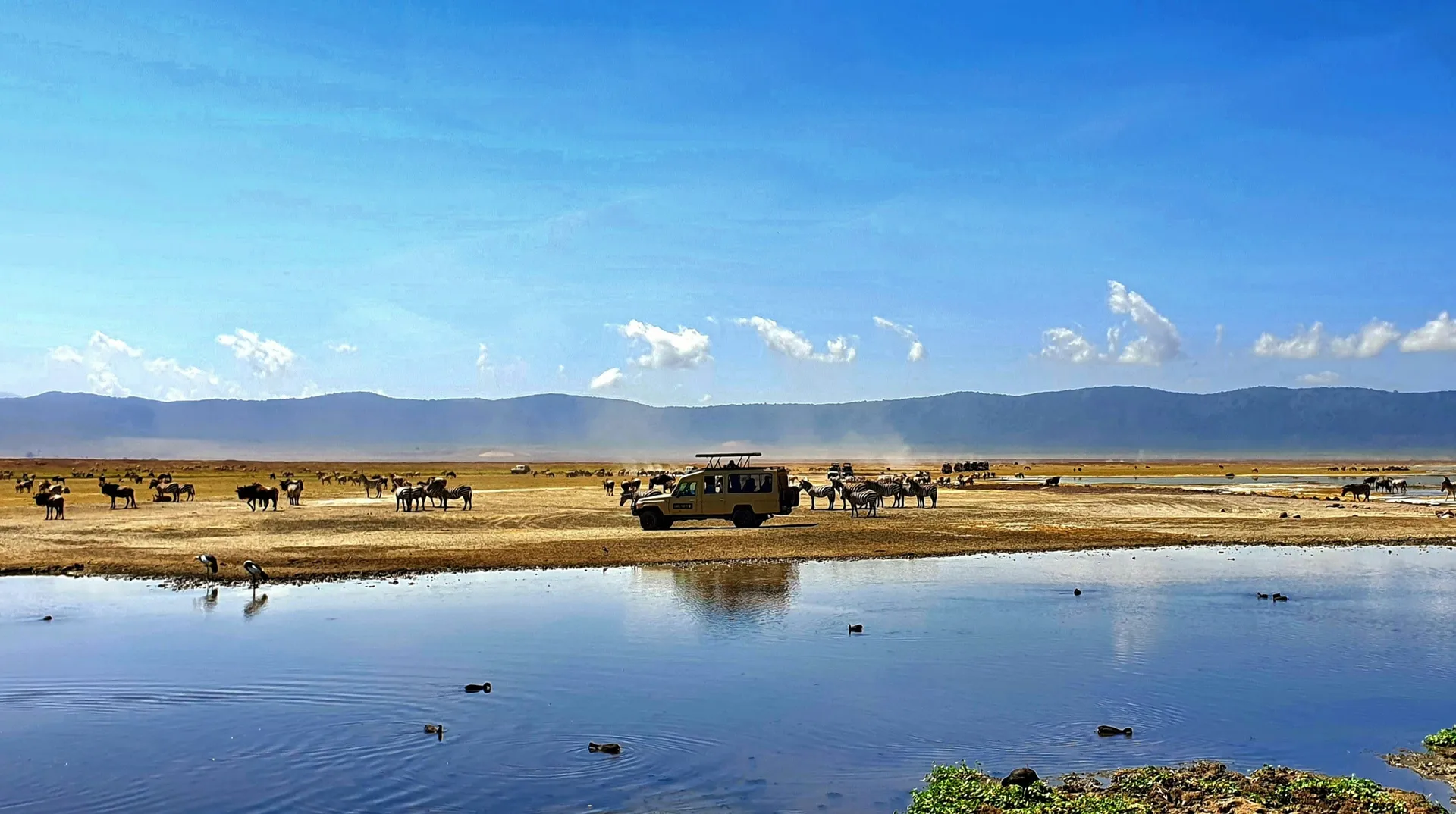
The crater floor is home to one of the densest concentrations of wildlife in Africa. Over 25,000 large animals live permanently within the crater walls including: all of the Big Five (lion, leopard, elephant, buffalo, and the rare black rhino), hippos in the central lake, flamingos lining the shores, cheetahs, spotted hyenas, golden jackals, wildebeest, zebras, and eland.
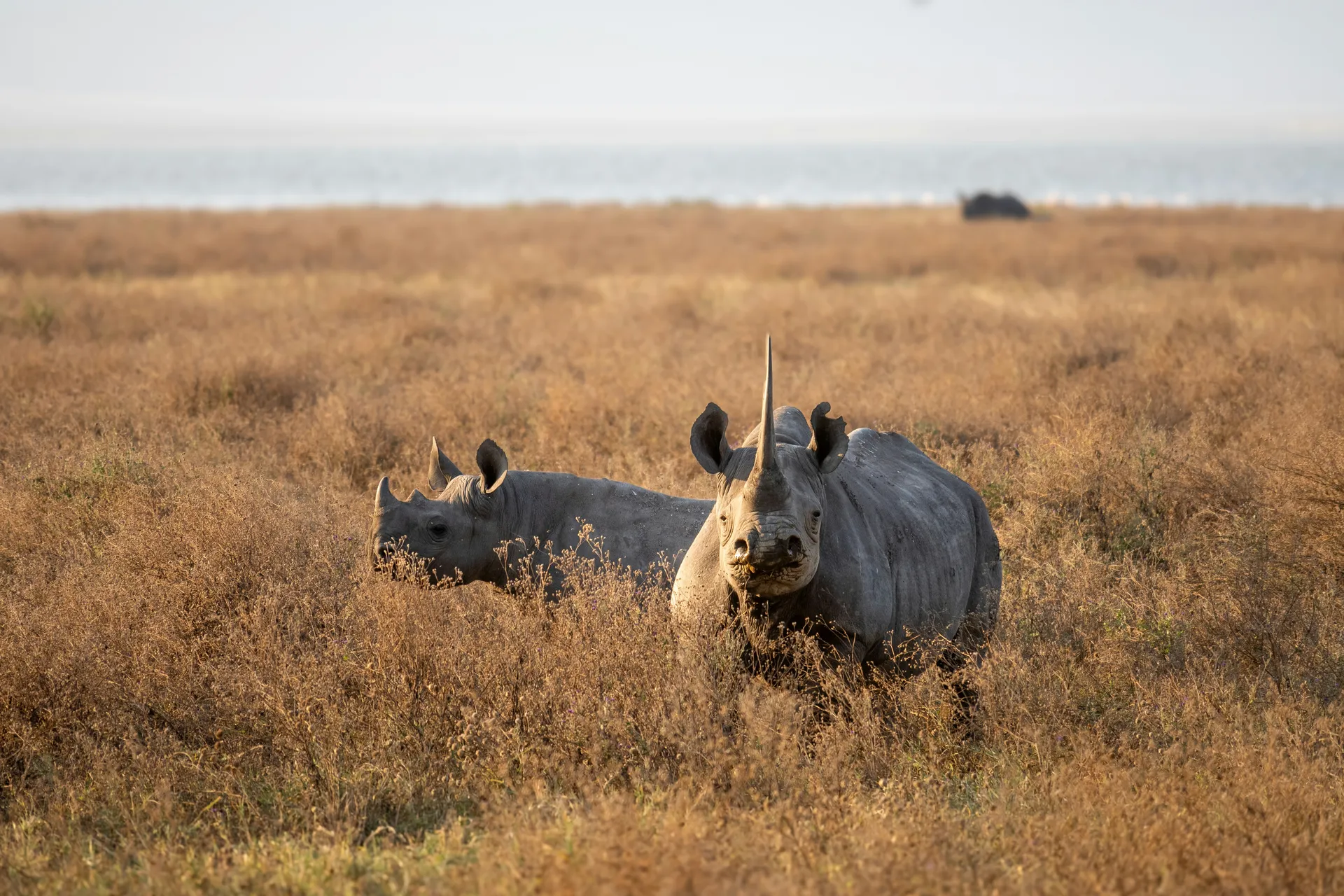
Black Rhino: Ngorongoro Crater is one of the last places in East Africa where you have a realistic chance of seeing the critically endangered black rhinoceros in the wild. A small but stable population of around 25–30 individuals lives within the crater.
The Ngorongoro Conservation Area was created in 1959 when the Maasai were displaced from the Serengeti. It operates as a multiple-use area — the only place in Africa where Maasai pastoralists live alongside wildlife without the land being a purely protected national park. Visiting a Maasai village near the crater is a fascinating cultural experience.
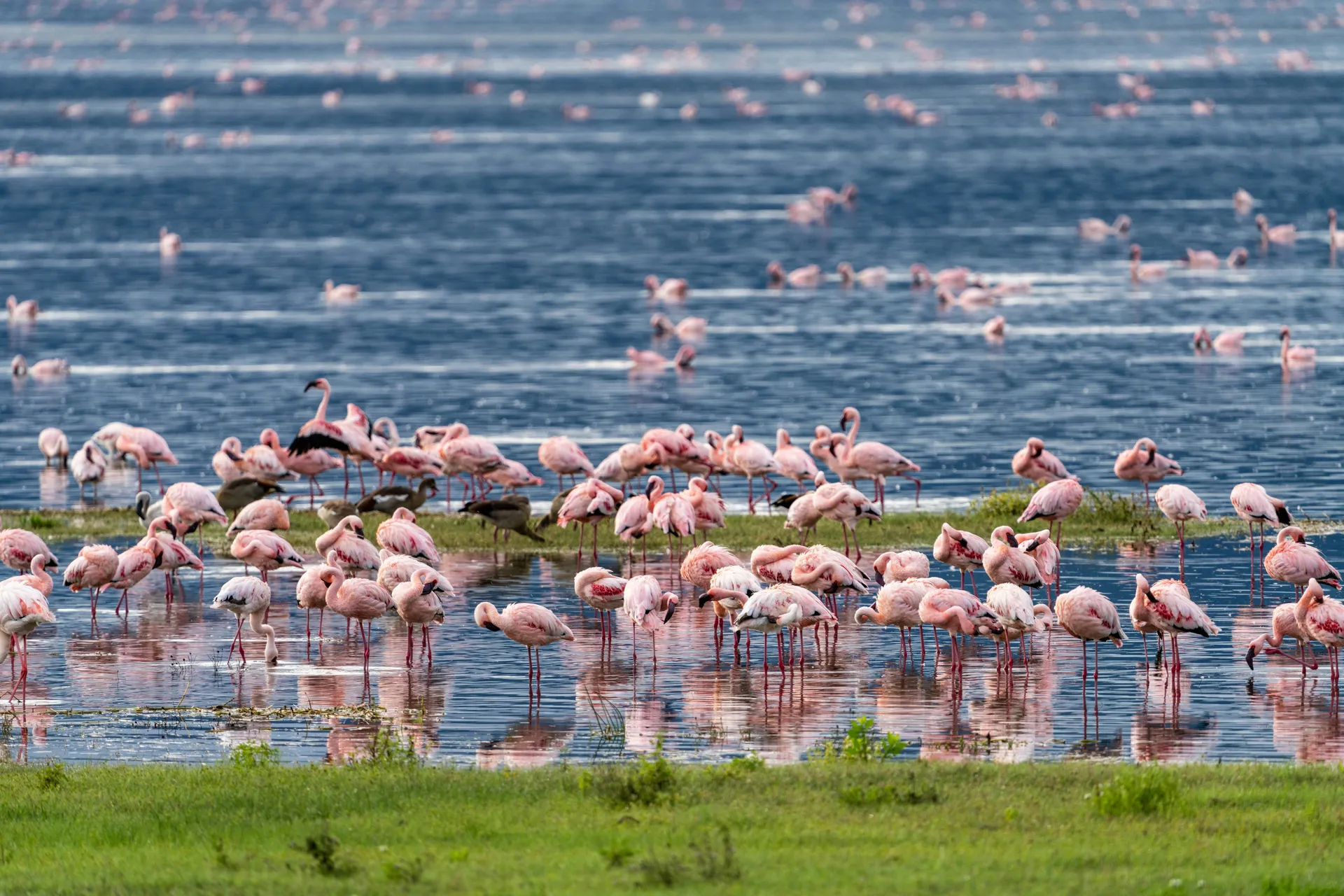
Lake Manyara, Ngorongoro Crater and Tarangire.
Ngorongoro Crater and the vast Serengeti.
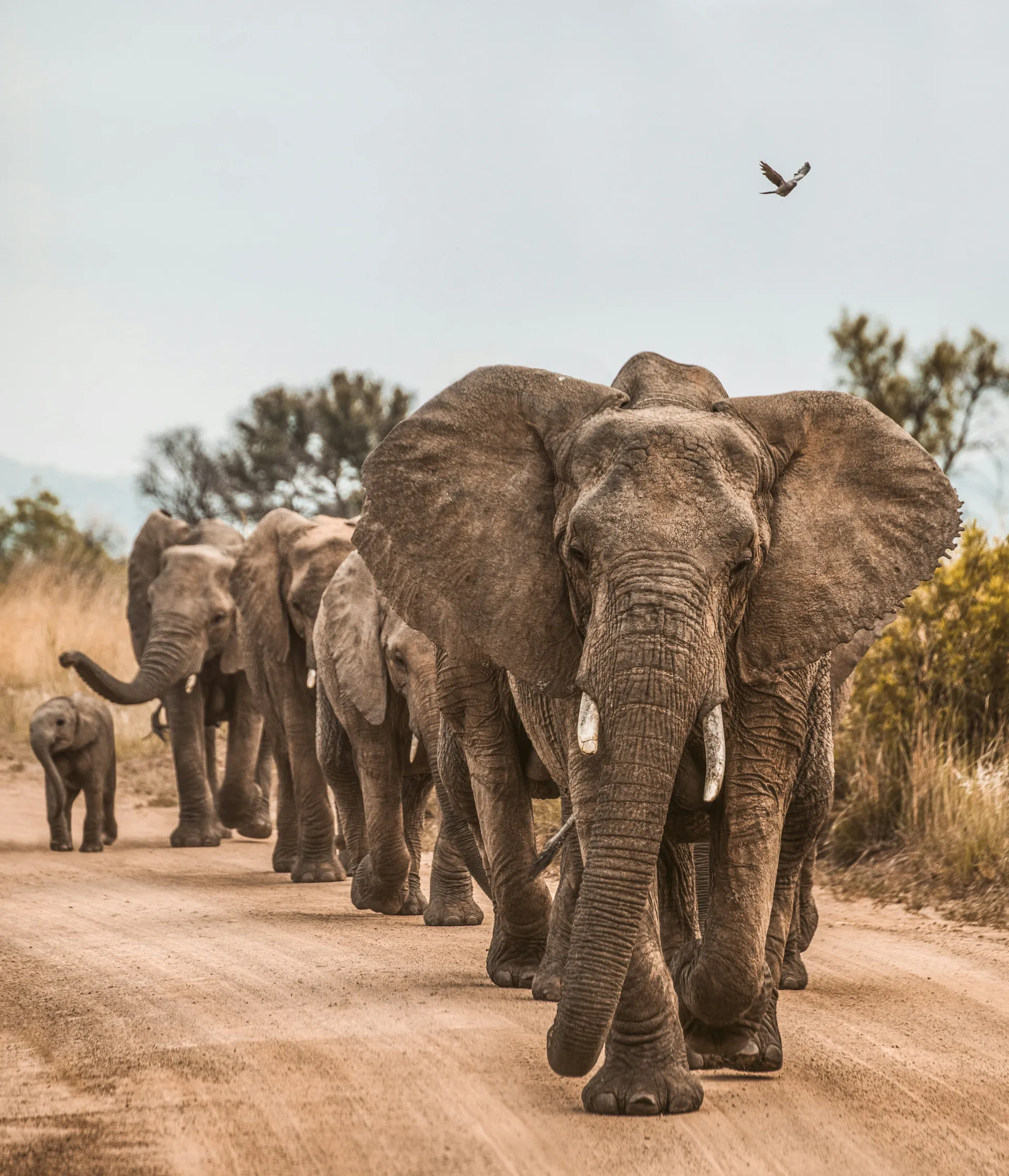
All major parks with multiple Ngorongoro visits.